E&O Laboratories Ltd have successfully grown their Culture Media business over the last 30 years to become a leading manufacturer
servicing Microbiology Laboratories , Location in Scotland. Their comprehensive media range is continually expanding into specialised industry sectors as well as aiding the rapid diagnosis of the newest antibiotic resistant bacteria strains.

INDUSTRY SECTORS:
• Clinical, Veterinary & Aquaculture
• Food, Water & Environmental
• Pharmaceutical, Industrial & Cosmetics
• Academia & Research

PRODUCT CATEGORIES:
• Ready-to-use Culture Media – Bottled, Bagged and Plated
• Dehydrated Culture Media & Raw Materials
• Antibiotic Supplements & Reagents
• Fresh Donor Horse & Sheep Blood – Frozen Sterile Filtered Serum

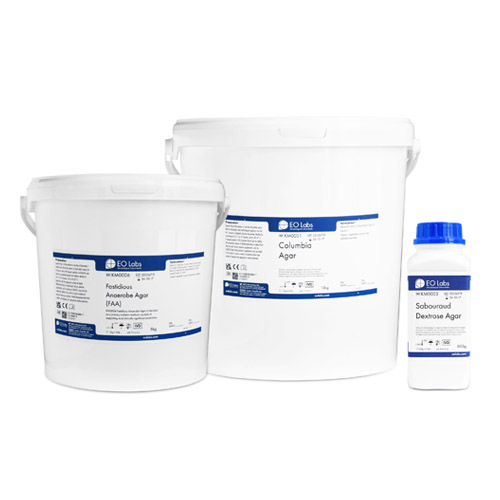
Dehydrated Culture Media products are formulated to supply the required nutrients to allow for the growth of microorganisms. Used in combination with a variety of selective agents and incubation conditions a wide range of specific organisms can be isolated. With careful raw material selection of the various media components E&O can ensure a consistent level of quality and performance. For each formulation the necessary ingredients are accurately weighed, combined and blended together to produce a homogenous powdered product.

Môi trường Buffer Peptone Water (BPW)-image

Môi trường Buffer Peptone Water (BPW)

  • Product Details
  • APPLICATIONS
  • SPECIFICATIONS
  • CODE
  • DOCUMENTS

Formulated to ISO 6579, Buffered Peptone Water (BPW) is a pre-enrichment medium designed to help sub-lethally damaged Salmonella spp. recover before introducing them into a selective enrichment medium.
Enzymatic digest of casein is the source of the required nitrogen, carbon and vitamins. Sodium chloride maintains the osmotic balance in the medium. Di-sodium hydrogen phosphate and potassium di-hydrogen phosphate act as buffers in the medium. This nutritious medium is free from inhibitors and is well buffered to maintain pH 7.0 for the incubation period. Sub-lethal injury to Salmonella spp. occurs in many food processes and this pre-enrichment step greatly increases the chance of their recovery, especially if a low number of cells are present in a sample.